
Business
‘Sri Lankan tea’s current crisis only reinforces the value of productivity-linked wages’

By Dr. Roshan Rajadurai
“An incentive is a bullet, a key: an often tiny object with astonishing power to change a situation”
– Economist, Steven Levitt
Almost 7 months from the Government’s initial decision to ban the import and use of synthetic fertilizers and as at the date of this publication, Sri Lanka’s entire agriculture and plantation economy is still frantically in search of any viable option to mitigate the threat of declining yields.
Without any prior planning or notice, our entire sector has been coerced into blindly participating in the most unscientific experiment ever attempted in Sri Lanka’s history. We are all left to now anticipate what the implications of an immediate, nation-wide halt to all established and essential best practices relating to plant nutrition, pest, fungus and weeds will be.
We are told that arrangements are being made to import organic fertilizer from various, untested sources, and agreements are minted to produce organic fertilizer locally, much akin to attempting to rebuild an airplane while it is still in flight. Nevertheless, the inconvenient truth remains. At present, all supplies of “organic” and inorganic fertilizer are in short supply.
Stocks which are available, have increased in price owing to both supply-demand dynamics, disrupted supply chains and unprecedented increases in landed costs. These escalating payments are making Sri Lankan tea’s already high cost of production (COP) even higher, which is placing Sri Lankan plantations under even further stress. This a few short months after an increase in worker wages was thrust through the Wages Board.
Sri Lankan tea’s strange new normal needs to be re-evaluated immediately
With the end of the year approaching, and the window for fertilizing crops closing, it appears that the industry will be locked into at least one – if not more – growth cycles absent basic nutrients of Nitrogen, Potassium, and Phosphorus, and with no ability to control pests and weeds. Without immediate solutions, the broad consensus among those with expertise is that we can start to see exponentially worse crop losses starting from the end of 2021, hitting approximately 40% by next year.
If RPCs were to have disregarded basic agronomic practices and norms in such a manner of their own volition, it would have been called criminal mismanagement. With agricultural best practices now being roundly ignored in favour of a largely undefined and unplanned strategy for transforming Sri Lanka into a nation with “100% organic agriculture”, this historic, and intentionally misinformed self-sabotage is being repackaged as visionary and progressive.
Meanwhile, the nation’s best agricultural experts are being ignored or in the case of Prof. Buddhi Marambe, sidelined and silenced, on the grounds that he simply stated scientific facts regarding the current agro-chemical ban and had been consistent in doing so, because he had previously spoken up against the previous Government’s disastrous decision to suspend glyphosate imports.
This was a policy which resulted in the rejection of Sri Lankan tea exports as a result of issues with Maximum Residue Limits (MRLs), and caused the permanent loss of extremely high value markets in Japan, and a similar escalation in costs; all without a single shred of scientific evidence being provided to justify the lasting damage caused. As a result, the Government of the time was compelled to backpedal on its decision, but not without irreversible damage being done for no apparent reason.
This “justification” highlights a dangerous trend of politicization of science. If the science does not agree with politics, then it now appears acceptable to simply dismiss the scientists, rather than engage with facts and ground realities.
A simple extrapolation shows a grim future for workers
Regardless of short-term political expediency, reality has a way of asserting itself. Spread across 14 districts, the tea industry alone provides direct employment to over 600,000 people engaged in cultivation and processing and indirect employment to a further 200,000 involved in the supply chain. The sector provides complete livelihood support for a resident population of one million in Regional Plantation Companies (RPCs) and 450,000 Tea Smallholders with one million dependents, hence supporting a total population of nearly 2.5 million.
When considering both employment and livelihood generation, it is estimated that the industry sustains more than 10% of our national population and its net foreign exchange earnings are only second to the garment industry.
Even if “organic” fertilliser is made available, there are still serious concerns as to whether it can provide sufficient nutrients. Hence, it appears that the writing is on the wall. With insufficient nutrients as a result of the unplanned push for organic, we anticipate a series of cascading failures stemming from a collapse in productivity. No amount of rhetoric will be able to turn back the tide of negative sentiment against such developments.
If not land productivity, at least labour
Unlike the garment industry, where progressive incentive structures were allowed to flourish, in our industry, workers remain bound to an outdated colonial era daily wage model. As a result, unlike the dynamism of the apparel sector, Sri Lanka’s plantation sector is also weighed down with one of the lowest labour productivity rates in the world. The combination of low land and labour productivity will create a series of cascading failures.
The only measure that could at least temporarily mitigate this dynamic is the implementation of productivity linked wages. This is a model which has the support of all RPCs, and which was has been widely practiced with tremendous success by tea smallholders. While they have been implemented with ease in low-mid grown estates, it is only in the high-grown regions, where resistance to these models has been encountered.
Crucially, this resistance is not from workers who have experience with productivity linked wages, but rather with Trade Unions who would likely lose relevance if such models were implemented. The benefits for workers are immense. In addition to creating a potential monthly earnings per worker of between Rs. 37,000-Rs 62,000, under previous proposals advanced by RPCs.
This will also give workers flexi-hours, empowering them to choose when and how they work. Given the labour shortages prevalent across the entire tea industry, such a move would at long last incentivize workers effectively, and reward them for achieving their full individual potential, thereby significantly optimizing labour productivity.
However, without a scientific resolution to the fertilizer crisis, wage reforms can only serve as a stop gap measure. As land productivity drops, RPCs, state plantations and smallholders alike will be forced to reduce the amount of work offered, leading to a continuous diminution of worker earnings.
The few remaining workers in the plantation industry will have no choice but to try their luck in other lines of work, accelerating the ongoing migration of labour from the estate sector. It is unclear whether other economic sectors have the capacity to absorb such a large group of workers at once.
Already, we have seen multiple outbreaks of mob violence on estates, with the majority of such incidents being triggered by disputes over wages. Without proper solutions to these burning issues, worker wages will eventually be disrupted. Will the authorities take responsibility for what will follow?

By Ifham Nizam
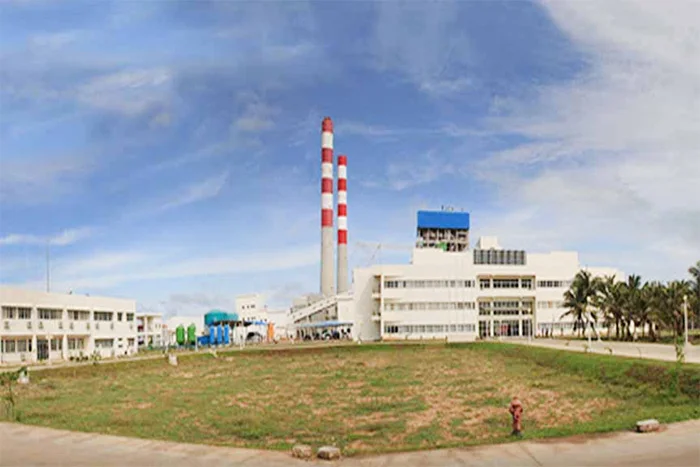
A Rs.160 million-plus diesel discrepancy at the Lakvijaya power plant in Norochcholai has triggered an internal investigation, raising questions over the handling of public funds and the controls governing fuel purchased for electricity generation.
The discrepancy surfaced during an internal audit of diesel supplied to the plant from the Kolonnawa and Sapugaskanda fuel terminals, according to senior officials familiar with the inquiry.
The audit has identified five transactions—two in December 2025 and three in January 2026—in which diesel recorded as delivered to the plant allegedly could not be fully accounted for in its physical stocks.
The investigation is now examining whether these were isolated discrepancies or part of a longer-running practice.
One transaction under scrutiny relates to January 16, when records reportedly showed that 10 diesel bowsers had arrived at the plant. Investigators subsequently found indications that the fuel stock corresponded to only nine bowsers.
A storekeeper responsible for the relevant fuel operation has reportedly been temporarily removed from those duties pending the investigation.
A senior official said investigators were reviewing historical records amid indications that similar discrepancies may have occurred over a longer period. If established, the financial exposure could therefore exceed the Rs.160 million currently identified.
The investigation is comparing fuel-terminal dispatch records, tanker movements, plant-entry records, receiving documents and physical stocks to establish exactly how much fuel was dispatched, received and accounted for.
That audit trail will also be critical in determining who authorised, received and certified the disputed consignments, and whether established controls were followed.
Relevant documents were reportedly transferred from Norochcholai to the company’s Colombo head office on September 26 for further examination, with electricity-sector security personnel assisting in the transfer.
The internal audit has also reportedly uncovered expired chemical stocks worth several hundred thousand rupees in the plant’s stores. Investigators are examining whether further inventory-management irregularities occurred.
The matter was also reportedly taken to the Puttalam Police Special Crimes Investigation Unit on September 26.
When contacted by Puttalam-based journalist Hiran Priyankara Jayasinghe for The Island Financial Review, Lakvijaya Power Plant Manager Nalaka Kumara confirmed that an investigation was under way but declined to provide further details.
The financial issue is direct: if the plant paid for diesel it did not receive, public-sector funds were spent without the electricity sector receiving the corresponding fuel.
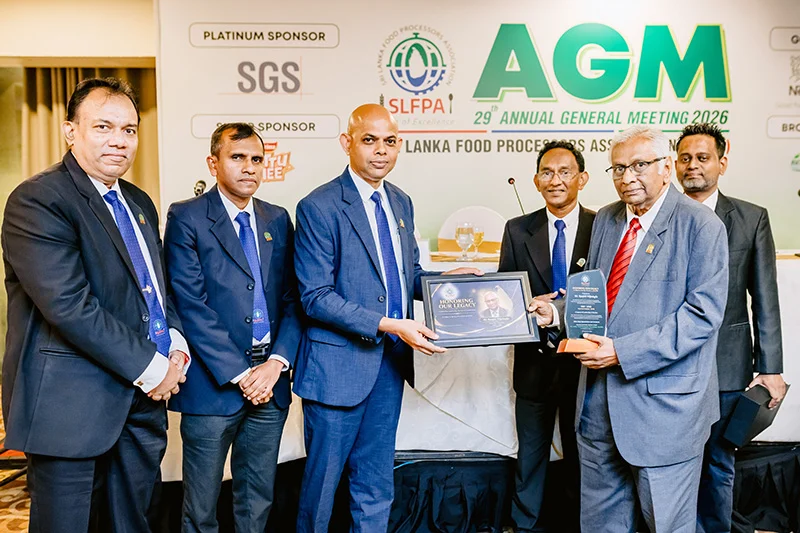
The Sri Lanka Food Processors Association (SLFPA) successfully convened its 29th Annual General Meeting (AGM) on September 23, 2026, at the Water’s Edge Hotel, Battaramulla. Bringing together key industry stakeholders and member organizations, the event served as a platform to review milestone achievements from the 2025/2026 term and outline strategic priorities for the nation’s food and beverage processing sector.
At the AGM, the new Executive Committee for 2027/2028 was appointed, comprising: Honorary President Aruna Senanayake C.W. Mackie PLC Imme. Past President Thusith Wijesinghe Trans Continental Packaging & Commodities (Pvt) Ltd.
President Elect Nadishan Guruge Meadlee Trading Co. (Pvt) Ltd.
1st Vice President Damitha Perera Forbes & Walkers Commodity Brockers (Pvt) Ltd.
2nd Vice President Rasika Seneviratne Diesel & Motor Engineering PLC 3rd Vice President Deepal De Alwis Neochem International (Pvt) Ltd.
Honorary Secretary Amila Weerasinghe Nestle Lanka Limited.
Asst. SecretaryDineth Alahakoon Country Style Foods (Pvt) Ltd.
Honorary Treasurer Sameera Jayathilaka Westmann Engineering Company (Pvt) Ltd.
Asst. Treasurer Niroshan Dalpethado C D De Fonseka & Sons (Pvt) Limited. In addition to the above office bearers, the following ten Executive Committee Members were appointed:
Sanjeewa De Silva Unilever Sri Lanka Limited Sheran De Alwis MA’S Tropical Food Processing (Pvt) Limited
Thusitha Ekanayake Anods Cocoa (Pvt) Ltd.
Vijitha Govinna Plenty Foods (Pvt) Limited Ms. Praharshi Wickramasekara International Commodity Exports (Pvt) Ltd.
Sanjeewa Niroshan SGS Lanka (Pvt) Ltd. Kushan Amarasinghe Finagle Lanka (Pvt) Ltd.
Rangajeewa Hettiarrachchi Fonterra Brands Lanka (Pvt) Ltd.
Harindra Abeyrathna Vision Technologies International (Pvt) Ltd. Thilina Weerasekara Ceylon Cold Stores PLC
The event was proudly supported by key industry partners, with SGS Lanka (Pvt) Ltd serving as the Platinum Sponsor. Unilever Sri Lanka Ltd. and Nestlé Lanka Ltd. joined as Gold Sponsors, Ceylon Agro Industries – Prima as the Silver Sponsor, while Lanka Exhibition & Conference Services (LECS) and Hero Nature Products (Pvt) Ltd., supported as Bronze Sponsors.
The proceedings concluded with a vote of thanks delivered by Hony. Secretary Deepal De Alwis, followed by cocktails and a fellowship networking session, providing an opportunity for members to connect and strengthen industry ties.

New premium ride option expands Uber’s portfolio from affordable Moto and Tuk rides to premium on-demand travel
Uber announced the launch of Uber Black in Sri Lanka, bringing its premium ride experience to the country for the first time. Designed as the “business class of back seats,” Uber Black combines premium vehicles and highly-rated drivers for riders looking for greater comfort, quality and a more elevated travel experience.
The launch comes as demand for premium products and experiences grows across Sri Lanka, with consumers seeking greater choice and quality in their everyday experiences. Uber Black brings this choice to on-demand mobility, whether for an airport journey, an important business meeting, a special occasion or simply when riders want to travel in greater comfort.

What happened on diverted Flydubai flight from Dubai to Tel Aviv?

“Vishishta Seva Vibhushana” medals presented under President’s patronage

Hindu Priests Seek State Intervention for Sivarasa Anojan

“A Nation United” National Steering Committee meets under President’s Chairmanship

PM declares open 2nd Day of National AI Expo 2026

Waste management and recycling to receive priority in the 2027 Budget – PM

‘Dates have the highest sugar content to fight Coronavirus’

Sunday Island 27 December – Headlines

#SundayIsland 17th December – Headlines

Sunday Island – 28th March

Sunday Island Headlines – 21 March

Sunday Island – 21st February – Headlines
-

 Latest News7 days ago
Showers above 100 mm are likely at some places in the Western, Sabaragamuwa, Central and North-western provinces and in Galle and Matara Districts
-

 Editorial7 days ago
Crimes punished and unpunished
-

 Features6 days ago
Beyond traditional jobs: Why Sri Lanka needs to facilitate the gig economy
-

 Editorial5 days ago
Birth of a bad law
-

 News3 days ago
Police remove Thileepan statue in Jaffna
-

 Latest News6 days ago
Kusal, Wellalage star as Sri Lanka defend 322 in Headingley thriller
-

 News5 days ago
TIN mandatory for key transactions from Nov. 1
-

 News7 days ago
IMF: Sri Lanka on course for 2027 market return